Poetry Tuesday

Poetry Tuesday! July 17

Hello! Welcome to Poetry Tuesday: the day we dip (or dive) into the lovely world of poetry!

Each Tuesday from June 19 to August 21, 2018, I’ll share a Poetry Activity, a Poem Study, plus an Advanced Poetry Lesson. Feel free to enjoy one, two, or all three of these fun resources! (Click on the title links)

Poetry Activity (for kids, adults, and everyone in between): Alliteration Poem

Poem Study: Bear in There, by Shel Silverstein

Advanced Poetry Lesson: Ballads, (Week 1 of 2)

Poetry Tuesday

Poetry Tuesday

Poetry Activity: Alliteration Poem

Interested in poetry?
Learn about alliteration using this poetry activity for kids, adults, and everyone in-between!

sun
(photo credit: Hannah Spuler)

A. Introduction to Alliteration:
Have you ever tried to say a tongue-twister? Can you say this one?

She sells seashells by the seashore.

Think it’s difficult to say this singularly silly saying?

When two or more words start with the same letter or sound, it’s called an alliteration.
(I just adore amazing alliterations! Don’t you?)

Here are some more examples:

1. Alexander the armadillo ate absolutely amazing apples and ants.
2. Beehives buzz and babies blow bubbles.
3. Caroline cried because she couldn’t catch cantaloupes.
4. Daryl didn’t do anything daring, did he?

These are silly examples, but alliteration can also be used beautifully in poetry to make it sing.

B. A Sunny Alliteration Poem
Our activity today will use alliterations to write a poem about the sun.

  1. Write down all the words you can think of that have to do with the sun. For example:
    hot
    big
    shines
    beautiful
    etc.
    Bonus points if you think of “s” words!
  2. Now see if any of those sun words can be changed to a word that starts with “s.” For example, the word “hot” can become “simmering,” and the word “beautiful” can become “spectacular.” Change as many as you can without help.
  3. (optional) Now see if you can change even more by using a thesaurus!
    What’s a thesaurus?? A thesaurus is a big book full of words that helps you find a different word that means the same thing. If I wanted to find another word for hot, I would look it up in my thesaurus and I might find words like scorching, sizzling, or boiling. If you don’t have a thesaurus on your bookshelf, you can use an online thesaurus. Type in your word and see what you find!
    http://www.thesaurus.com/
  4. Okay, do you have your list of s words that have to do with the sun?
    It might look a little like this:


    hot               
    scorching, sizzling
    beautiful    spectacular, superb, stunning
    big               substantial


  5. Now we write the poem!
    A few notes:

    ~This poem doesn’t have to rhyme or have a meter. It can just be free-form (See my example if that didn’t make sense. Notice how my poem doesn’t rhyme?)

    ~In this kind of poem, the first word of each line does not have to be capitalized. Use capital letters the way you would use them in a normal sentence.

    ~Each line can have one word, or many words. Play with the spacing! You have complete freedom.

    ~Not every word has to begin with “s.” If you need a few extra words to tie it together, that’s okay!


  6. Below is an example of what your poem could look like. Mine is pretty short, having used a short word list, but feel free to make yours longer! You could make it silly, super simple, or more serious. Experiment with different groups of words too. The sky’s the limit!


Sun
Spectacular,
striking,
sizzling,
stunning,
shining on
my skin,
shining in
my soul—
sun.
~Hannah Spuler

Pleased with your poem? Share it in the comments or post it on my Facebook page so we can all read and enjoy them!


Hungry for more? Check out this week’s…

Poem Study: Bear in There, by Shel Silverstein

Advanced Poetry Lesson: Ballads, (Week 1 of 2)


Poetry Tuesday

Poem Study: Bear in There

Let’s read a poem and study it together!

edit polar-bear-404314_1920

Not sure how to study a poem? Here are some ideas! Choose one or all of these:

  1. Read aloud and enjoy the poem
  2. Neatly write out your favorite stanza for handwriting practice or…
  3. Copy and paste the poem into your word processor and print it out
  4. Draw a picture about the poem
  5. Circle or underline the alliterations!

  6. Read more about the author’s life
  7. Share with someone you love <3


Bear in There

There’s a polar bear
In our Frigidaire–
He likes it ’cause it’s cold in there.
With his seat in the meat
And his face in the fish
And his big hairy paws
In the buttery dish,
He’s nibbling the noodles,
He’s munching the rice,
He’s slurping the soda,
He’s licking the ice.
And he lets out a roar
If you open the door.
And it gives me a scare
To know he’s in there–
That polary bear
In our Fridgitydaire.

by Shel Silverstein

Hungry for more? Check out this week’s…

Poetry Activity (for kids, adults, and everyone in between): Alliteration Poem

Advanced Poetry Lesson: Ballads, (Week 1 of 2)

Poetry Tuesday

Advanced Poetry Lesson: Ballads

Let’s write some poetry!

The next two Tuesdays we’ll be learning about ballads!

walrus and the carpenter
Lewis Carroll’s Walrus and the Carpenter

A. Introduction to Ballads
I love ballads. When I learned about ballads for the first time, I had already been writing them for years without knowing it. They’re regular, repetitive, and musical. Most songs you hear on the radio would be considered a ballad of one kind or another.

     Fun fact: Did you know that rap is actually a contemporary ballad?

B. What is a Ballad?

  1. It often has four lines per group, or stanza. (The example below actually has 6 lines per stanza, and that’s okay too)
  2. The 1st and 3rd line in each stanza has four accents, or stresses
  3. The 2nd and 4th lines have either 3 stresses or 4 stresses, but it needs to be the same throughout the whole poem. (see example below)
  4. Ballads rhyme. Often the 1st and 3rd lines rhyme and the 2nd and 4th lines rhyme. (This is called an ABAB pattern). This is flexible, but again, the pattern needs to be the same throughout the whole poem!
  5. Repetition is important in a ballad. Sometimes a poet will make the last line of each stanza the same.
  6. Ballads often tell some kind of story, often a story about how someone died.
  7. Example of stresses: (Read the capital letters in the lines below a little louder than the other letters.)

The SUN was SHINing ON the SEA
See how there are 4 stresses?
SHINing with ALL its MIGHT
And then 3? 

C. Ballad Example

Walrus and the Carpenter
(lines 1-18), from
Through the Looking Glass

The sun was shining on the sea,
Shining with all his might:
He did his very best to make
The billows smooth and bright —
And this was odd, because it was
 The middle of the night.

The moon was shining sulkily,
Because she thought the sun
Had got no business to be there
After the day was done —
“It’s very rude of him,” she said,
“To come and spoil the fun.”

The sea was wet as wet could be,
The sands were dry as dry.
You could not see a cloud, because
No cloud was in the sky:
No birds were flying overhead —
There were no birds to fly.

~
Lewis Carroll 

D. Write your ballad!
Are you ready to write your ballad? Great! Come up with your story and write it in verse form, following the guidelines above. If you’re happy with it, remember to share it on my Facebook page or in the comments!


Hungry for more? Check out this week’s…

Poetry Activity (for kids, adults, and everyone in between): Alliteration Poem

Poem Study: Bear in There, by Shel Silverstein

Poetry Tuesday

Poetry Tuesday! July 10

Hello! Welcome to Poetry Tuesday: the day we dip (or dive) into the lovely world of poetry!

Each Tuesday from June 19 to August 21, 2018, I’ll share a Poetry Activity, a Poem Study, plus an Advanced Poetry Lesson. Feel free to enjoy one, two, or all three of these fun resources! (Click on the title links)

Poetry Activity (for kids, adults, and everyone in between): Fill-in-the-blank poem

Poem Study: The Brook, by Alfred Lord Tennyson

Advanced Poetry Lesson: Odes, Week 2

Poetry Tuesday

Poetry Tuesday

Poetry Activity: Fill-in-the-Blank Poem

Interested in poetry?
Combine rhyme and meter using this fill-in-the-blank poetry activity for kids, adults, and everyone in-between!

fill in the blank poem

A. Review: Rhyme

Remember the lesson about rhyming?
These are examples of words that rhyme:

stop, hop, lop, plop

Need a refresher on rhyming? Click here.

B. Review: Meter

Remember the lesson about meter?
Here are two lines that have four beats, or stresses:

Twinkle, Twinkle, little star,
How I wonder what you are.

Need a refresher on meter? Click here.

C. Fill-in-the-blank poem

Below is a fill-in-the-blank poem where the basic idea and structure is there and you get to fill in the blanks! This poem has a strong meter as well as an AABB rhyme scheme (lines 1 and 2 rhyme with each other and lines 3 and 4 rhyme). If the word is at the end of the line, make sure you keep the rhyme scheme. Give it a try!

(Title)

My       (noun)       is/are cold
And my       (noun)       is/are old.
My       (noun)       is/are hot
But my       (noun)       is/are not.

My      (noun)       is/are blue,
My      (noun)       too,
But not my       (noun)     ,
Because it’s/they’re       (noun)        .

I have a       (noun)       
And he/she/it has a      (noun)      .
I/We        (verb)       outside
But I/we        (verb)       inside.

My      (noun)        is tall,
My      (noun)        is small,
And that is all,
My friend.

The End.


Simplified definitions:
Noun: a person, place, thing, or idea
Verb: an action word


Hungry for more? Check out this week’s…

Poem Study: The Brook, by Alfred Lord Tennyson

Advanced Poetry Lesson: Odes, Week 2


Poetry Tuesday

Poem Study: The Brook

Let’s read a poem and study it together!

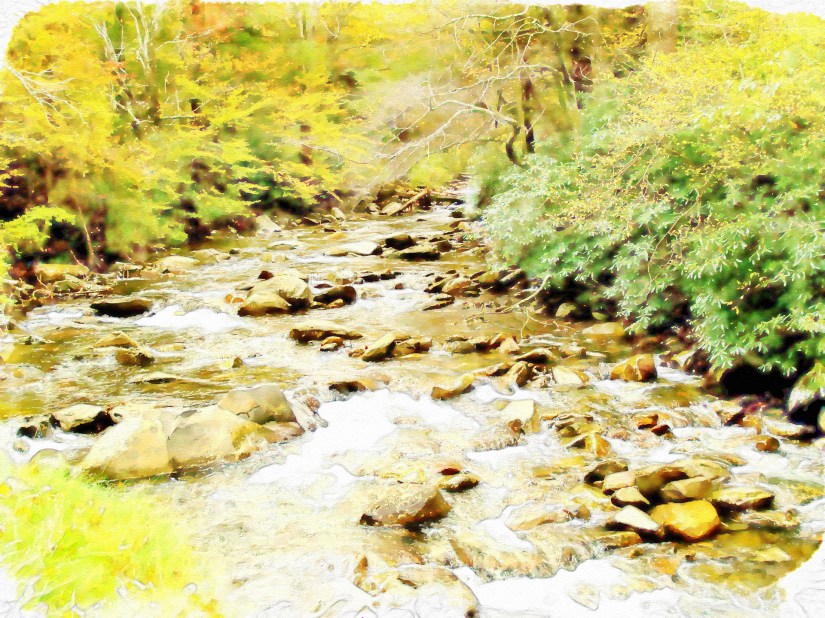
the brook scenic-787617_1920

Not sure how to study a poem? Here are some ideas! Choose one or all of these:

  1. Read aloud and enjoy the poem
  2. Neatly write out your favorite stanza for handwriting practice or…
  3. Copy and paste the poem into your word processor and print it out
  4. Draw a picture about the poem
  5. Circle or color-code the words that rhyme. (Learn about rhyme here!)
  6. Read more about the author’s life
  7. Share with someone you love <3


The Brook
(excerpt)

I chatter, chatter, as I flow
To join the brimming river;
For men may come and men may go,
But I go on forever.

I wind about, and in and out,
With here a blossom sailing,
And here and there a lusty trout,
And here and there a grayling,

And here and there a foamy flake
Upon me, as I travel
With many a silvery waterbreak
Above the golden gravel,

And draw them all along, and flow
To join the brimming river
For men may come and men may go,
But I go on for ever.

I slip, I slide, I gloom, I glance,
Among my skimming swallows;
I make the netted sunbeams dance
Against my sandy shallows.

I murmur under moon and stars
In brambly wildernesses;
I linger by my shingly bars;
I loiter round my cresses.

And out again I curve and flow
To join the brimming river;
For men may come and men may go,
But I go on forever.

By Alfred Lord Tennyson


Hungry for more? Check out this week’s…

Poetry Activity (for kids, adults, and everyone in between): Fill-in-the-blank poem

Advanced Poetry Lesson: Odes, Week 2

Poetry Tuesday

Advanced Poetry Lesson: Odes, Week 2

Let’s write some poetry!

This week and last, we’ve been learning about Odes!

tuna in the market

A. Introduction to Odes:
An ode is a poem that celebrates or appreciates something or someone.

For example…
John Keats wrote an Ode to a Nightingale.
Pablo Neruda wrote an Ode To Sadness.
Samuel Taylor Coleridge wrote an Ode about France.
There is an Ode to Silence, by Edna St. Vincent Millay.
William Wordsworth wrote an Ode to Duty.
There’s even an Ode To My Socks by 
Pablo Neruda, who’s known for writing odes to unusual subjects.

Here’s part of an ode written by Pablo Neruda about a large fish in the market:

Ode to a Large Tuna in the Market
(Translated by Robin Robertson)

“Surrounded
by the earth’s green froth
—these lettuces,
bunches of carrots—
only you
lived through
the sea’s truth, survived
the unknown, the
unfathomable
darkness, the depths
of the sea,
the great
abyss,
le grand abîme,
only you:
varnished
black-pitched
witness
to that deepest night.”


B. All About Odes

  1. An ode is about loving, appreciating, or celebrating someone or something
  2. An ode is full of emotion, strong images, and descriptive words
  3. An ode can rhyme
  4. An ode is usually quite serious but it can be silly if the ode is more of a joke

C. Reading Odes
As you read the following excerpts, ask yourself:
~What is the poet celebrating or admiring?
~Does the poem rhyme?
~Does it have strong imagery?

The (Brooklyn) Bridge
(excerpt)

How many dawns, chill from his rippling rest
The seagull’s wings shall dip and pivot him,
Shedding white rings of tumult, building high
Over the chained bay waters Liberty—

Then, with inviolate curve, forsake our eyes
As apparitional as sails that cross
Some page of figures to be filed away;
—Till elevators drop us from our day…
~Hart Crane

The Fire of Driftwood
(excerpt) 
We sat within the farmhouse old,
Whose windows, looking o’er the bay,
Gave to the sea-breeze damp and cold,
An easy entrance, night and day.

Not far away we saw the port,
The strange, old-fashioned, silent town,
The lighthouse, the dismantled fort,
The wooden houses, quaint and brown.

We sat and talked until the night,
Descending, filled the little room;
Our faces faded from the sight,
Our voices only broke the gloom.
~Henry W. Longfellow

D. Writing An Ode
Your turn to write an ode!

~Think of something or someone that you love and want to celebrate!
~Try writing a short one to start (5 lines or so) and then grow it to 7 or 10 as you have more to say.
~If you’re a more experienced writer, see if you can make it 15-30 lines!
~If you like rhyming, go for it, but remember that not every ode has to rhyme.

E. Advanced: More About Odes:
For the purposes of this quick, fun, introduction, I’ve only talked about odes in general, but if you’re interested, look into the specific kinds of odes:
Pindaric
Horatian
Irregular

There are also different  ode parts:
The strophe
The antistrophe
The epode

Pleased with your ode? Share it on my Facebook page or in the comments!

Hungry for more? Check out this week’s…

Poetry Activity (for kids, adults, and everyone in between): Fill-in-the-blank poem

Poem Study: The Brook, by Alfred Lord Tennyson

Poetry Tuesday

Poetry Tuesday! July 3

Hello! Welcome to Poetry Tuesday: the day we dip (or dive) into the lovely world of poetry!

Each Tuesday from June 19 to August 21, 2018, I’ll share a Poetry Activity, a Poem Study, plus an Advanced Poetry Lesson. Feel free to enjoy one, two, or all three of these fun resources! (Click on the title links)

Poetry Activity (for kids, adults, and everyone in between): Write Your Own Nursery Rhymes

Poem Study: My Shadow, by Robert Louis Stevenson

Advanced Poetry Lesson: Odes (Week 1 of 2)

Poetry Tuesday

Poetry Tuesday

Poetry Activity: Write Your Own Nursery Rhymes!

Interested in poetry?
Combine rhyme and meter using this activity for kids, adults, and everyone in-between.

nursery rhymes

A. Introduction: Nursery Rhymes
Can you finish this phrase?

Humpty Dumpty sat on a wall,
Humpty Dumpty had a great—

Did you get it??
Okay, now how about this one?

Jack be nimble, Jack be quick,
Jack jump over the candle—

And this one?

Little Boy Blue, come blow your horn,
The cow’s in the meadow, the sheep in the—

How did you do?
If you grew up with nursery rhymes, you probably could have filled in all those missing words in your sleep, and even recited the rest of the rhyme. If you grew up speaking English, chances are, you knew at least one of those nursery rhymes.

You also probably knew that nursery rhymes were made for children. But have you ever stopped to think about why they are so easy to remember?

Any guesses?
(Drumroll please…)

They rhyme! (Probably why they’re called nursery rhymes.) Take the first example…

Jack be nimble, Jack be quick,
Jack jump over the candlestick.

They also have a simple meter:

Jack be nimble, Jack be quick,
Jack jump over the candle stick.

(Not quite sure you understand? Look at these past lessons: rhyme, meter)

B. Write your own nursery rhyme!
Let’s use some classic nursery rhymes and change them slightly to make them into new poems! During this activity, watch for the rhyming words and the meter!

  1. Read the poem
  2. Fill in the blanks to change the meaning and make it as silly (or serious) as you like
  3. Make sure you keep the beat (stresses) the same as the original poem or may end up sounding a bit funny!

Original:
Hey Diddle Diddle, the cat and the fiddle,
The cow jumped over the moon.
The little dog laughed to see such a sight
And the dish ran away with the spoon!

Fill in the blanks to write your own poem!
Hey Diddle Diddle, the _______ and the fiddle
The __________ jumped over the moon
The little __________ laughed to see such a sight
And the __________ ran away with the spoon

Original: 
Mary, Mary, quite contrary, how does your garden grow?
With silver bells and cockle shells, and little maids all in a row.

Fill in the blanks to write your own poem!
________ _________
, quite contrary, how does your ________ grow?
With silver ________ and
_________  ________, and little _________ all in a row.

Pleased with your poem? Share it in the comments or post it on my Facebook page so we can all read and enjoy them!

C. Extra Challenge: A Nursery Rhyme From Scratch
To write a nursery rhyme, come up with either:
1. A lesson to teach children (aka, How to Count, or Why Kids should Eat Their Veggies) or
2. A simplified story from history  (aka, The Noble Duke of York)

See if you can come up with four lines of the poem, where the first two lines rhyme and the second two rhyme. See what you can create, and don’t forget to share!

Hungry for more? Check out this week’s…

Poem Study: My Shadow, by Robert Louis Stevenson

Advanced Poetry Lesson: Odes (Week 1 of 2)