Poetry Tuesday

Poetry Tuesday! July 24

Hello! Welcome to Poetry Tuesday: the day we dip (or dive) into the lovely world of poetry!

Each Tuesday from June 19 to August 21, 2018, I’ll share a Poetry Activity, a Poem Study, plus an Advanced Poetry Lesson. Feel free to enjoy one, two, or all three of these fun resources! (Click on the title links)

Poetry Activity (for kids, adults, and everyone in between): Acrostic Poem

Poem Study:  The Sun Has Set by Emily Jane Brontë, or Bed in Summer by Robert Louis Stevenson

Advanced Poetry Lesson: Ballads

Poetry Tuesday

Poetry Tuesday

Poetry Activity: Acrostic Poem

Interested in poetry?
Write an acrostic poem using this activity for kids, adults, and everyone in-between!


A. Choose a word for your poem
Pick a word. It could be your name, but if your name is either super short or super long, you might want to choose a different word. For the sake of this example, I’ll choose my last name: Spuler

B. Write your word
Now write your word vertically (up and down) on your page, starting at the top and going down:

S
P
U
L
E
R

C. Write your poem!
Now think of words that start with the letter on each line. Try to use words that describe or relate to the word you chose. I chose my last name, so I’ll describe my family:

Spirited
Poetic
Unique
Loving
Expressive
Resourceful

D. Share your Poem in the comments or on my Facebook page, or…

E. Try this challenge!
Make an acrostic poem with the word SUNSHINE, except this time change the location of the words. For example….

                Simmering
              fUn
shines oN my face
      BurnS
              H
I
N
E

Pleased with your poem? Share it in the comments or post it on my Facebook page so we can all read and enjoy them!


Hungry for more? Check out this week’s…

Poem Study:  The Sun Has Set by Emily Jane Brontë, or Bed in Summer by Robert Louis Stevenson

Advanced Poetry Lesson: Ballads


Poetry Tuesday

Poem Study: The Sun Has Set, or Bed in Summer

Let’s read a poem and study it together!

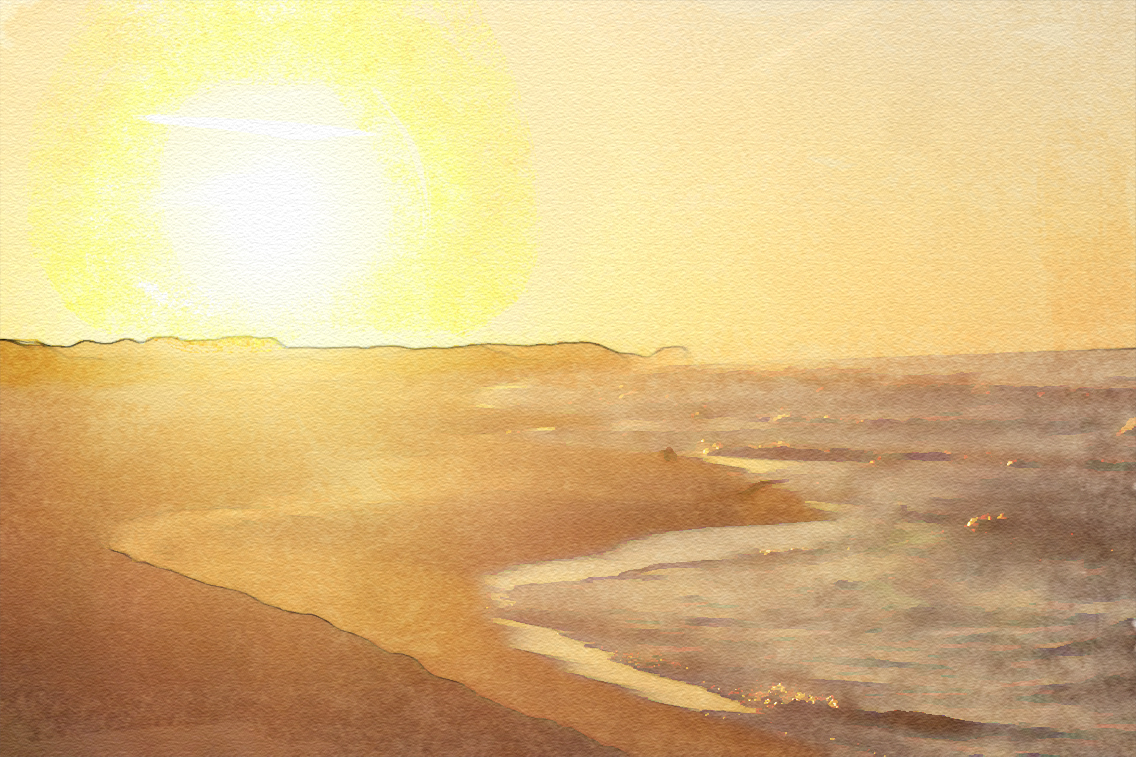
sunset
©Hannah Spuler, 2018

Not sure how to study a poem? Here are some ideas! Choose one or all of these:

  1. Read aloud and enjoy the poem
  2. Neatly write out your favorite stanza for handwriting practice or…
  3. Copy and paste the poem into your word processor and print it out
  4. Draw a picture about the poem
  5. Circle or color-code the words that rhyme!

  6. Read more about the author’s life
  7. Share with someone you love <3


The Sun Has Set

The sun has set, and the long grass now
Waves dreamily in the evening wind;
And the wild bird has flown from that old gray stone
In some warm nook a couch to find.

In all the lonely landscape round
I see no light and hear no sound,
Except the wind that far away
Come sighing o’er the healthy sea.

~Emily Jane Brontë


Bed in Summer

In winter I get up at night
And dress by yellow candle-light.
In summer, quite the other way,
I have to go to bed by day.

I have to go to bed and see
The birds still hopping on the tree,
Or hear the grown-up people’s feet
Still going past me in the street.

And does it not seem hard to you,
When all the sky is clear and blue,
And I should like so much to play,
To have to go to bed by day?

~Robert Louis Stevenson


Hungry for more? Check out this week’s…

Poetry Activity (for kids, adults, and everyone in between): Acrostic Poem

Advanced Poetry Lesson: Ballads

Poetry Tuesday

Advanced Poetry Lesson: Ballads Week 2

Let’s write some poetry!

This Tuesday and last we’ve been learning about Ballads!

woman-2887280_1920 (1)

A. Introduction to Ballads
Ballads are regular, repetitive, and musical. Most songs you hear on the radio would be considered a ballad of one kind or another.

B. What is a Ballad?

  1. It often has four lines per group, or stanza. (The example below actually has 6 lines per stanza, and that’s okay too)
  2. The 1st and 3rd line in each stanza has four accents, or stresses
  3. The 2nd and 4th lines have either 3 stresses or 4 stresses, but it needs to be the same throughout the whole poem. (see example below)
  4. Ballads rhyme. Often the 1st and 3rd lines rhyme and the 2nd and 4th lines rhyme. (This is called an ABAB pattern). This is flexible, but again, the pattern needs to be the same throughout the whole poem!
  5. Repetition is important in a ballad. Sometimes a poet will make the last line of each stanza the same.
  6. Ballads often tell some kind of story, often a story about how someone died.
  7. Example of stresses: (Read the capital letters in the lines below a little louder than the other letters.)

The SUN was SHINing ON the SEA
See how there are 4 stresses?
SHINing with ALL its MIGHT
And then 3? 

C. Ballad Example

Bridal Ballad

The ring is on my hand,
And the wreath is on my brow;
Satins and jewels grand
Are all at my command,
And I am happy now.

And my lord he loves me well;
But, when first he breathed his vow,
I felt my bosom swell—
For the words rang as a knell,
And the voice seemed his who fell
In the battle down the dell,
And who is happy now.

But he spoke to re-assure me,
And he kissed my pallid brow,
While a reverie came o’er me,
And to the church-yard bore me,
And I sighed to him before me
(Thinking him dead D’Elormie),
“Oh, I am happy now!”

And thus the words were spoken,
And this the plighted vow;
And, though my faith be broken,
And, though my heart be broken,
Here is a ring, as token
That I am happy now!—
Behold the golden token
That proves me happy now!

Would God I could awaken!
For I dream I know not how,
And my soul is sorely shaken
Lest an evil step be taken,—
Lest the dead who is forsaken
May not be happy now.

~Edgar Allen Poe

D. Write your ballad!
Are you ready to write your ballad? Great! Come up with your story and write it in verse form, following the guidelines above. If you’re happy with it, remember to share it on my Facebook page or in the comments!


Hungry for more? Check out this week’s…

Poetry Activity (for kids, adults, and everyone in between): Acrostic Poem

Poem Study:  The Sun Has Set by Emily Jane Brontë, or Bed in Summer by Robert Louis Stevenson

Fun List Mondays

Fun List Monday, July 23

If You Could Only Take 3 and a 1/2 Things With You On A Desert Island, They Would Be…

A knife? A pot for boiling water? A phone? 1/2 a bottle of suncreen? 1/2 a juice box? If you were stuck on a desert island, you probably wouldn’t need toothpaste. But what would you need? I can’t wait to hear your ideas!

edit desert sea-3131810_1920 copy

Write a list with me! Every Monday I will post a fun list. Fill out your list and enjoy it by yourself, share it on my Facebook page. Not convinced? Read about how lists encourage better writing here.

Like this activity? See other Fun List Mondays here!

Story Share Topic!

Story Share Topic: Feelings

Ready for this week’s Story Share Topic?
Join in the fun! Write your story and send it in for a chance to have your story shared on the site!

This Week’s Story Share Topic:

land of feelings

Write a story about a character who travels to the Land of Feelings.

What does it look like? What happens there? Who does the main character meet? What is the problem? How is it solved? How does the character change because of the trip? Your creativity is the limit!
(Please keep it between 100 and 1000 words.)

Need at alternate topic?
Write a story about a character who feels sad. Why is he/she sad? What happens that eventually makes them happy again?

To share: Send your story next Friday to Fridaystoryshare@gmail.com

FAQ: If you don’t want to share your story, can you still write one? Absolutely!
Do you have to write a story on this particular topic? Nope! Writing stories is a great creative writing exercise, no matter what the topic. The topic is a prompt to get you started!

Writing with little ones? Read this post about how to include young children in writing activities.

Furry Thursday

Furry Thursday, No. 5

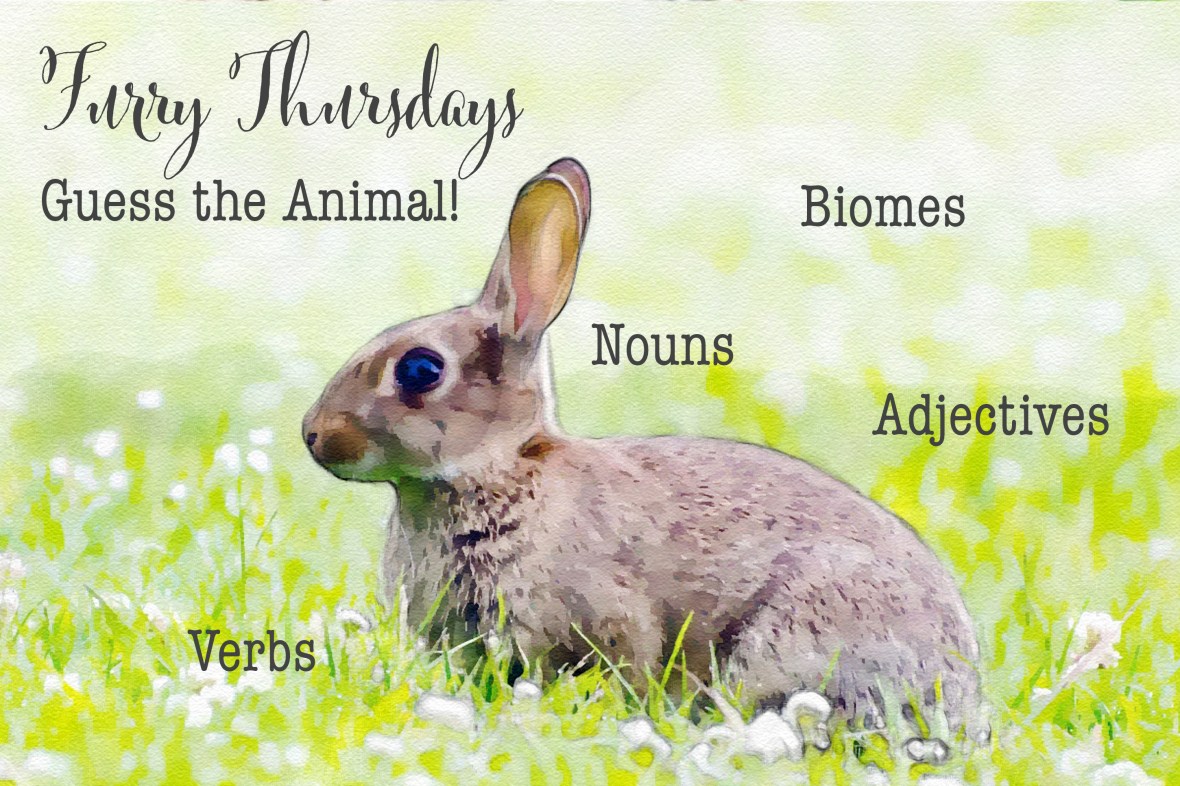
Can you guess the animal based on the clues?
Smash up science and English parts of speech together with this guessing game!

adjectives: fluffy, crafty, quick, frisky, playful, sly, fierce, protective, bushy-tailed, beautiful
verbs: bound, hunt, bark, play, run,
nouns: ears, coat
biomes: diverse: grasslands, deserts, forests, tundra

Think you know which animal?
Click here for the answer!

Simplified definitions:
Adjective: a describing word, placed before a noun (or pronoun)
Noun: 
a person, place, thing, or idea
Verb: 
an action word
Biome:
the type of environment where living things make their homes, a habitat (ex: desert, rainforest, tundra)
herbivore:
plant-eater
carnivore:
meat-eater
omnivore:
eats both plants and meat

Furry Thursday rabbit

Freewrite Wednesday

Freewrite Wednesday: Feelings

Ready to free your writing? Let’s do a freewrite together!

edit laughter happy-286152_1920

Write about a time you’ve had a strong feeling.


Questions to get you started:
What happened to make you feel that way? What did you do once you experienced that feeling? What did you want to do? Do you think you might feel that way again?

Set your timer for 10 minutes and write, write, write!

About Freewrites: A freewrite is exactly what it sounds like: free! Use a freewrite to practice channeling thoughts from your mind to the paper. Never done a freewrite? Learn more in my Guide to Freewriting 

Poetry Tuesday

Poetry Tuesday! July 17

Hello! Welcome to Poetry Tuesday: the day we dip (or dive) into the lovely world of poetry!

Each Tuesday from June 19 to August 21, 2018, I’ll share a Poetry Activity, a Poem Study, plus an Advanced Poetry Lesson. Feel free to enjoy one, two, or all three of these fun resources! (Click on the title links)

Poetry Activity (for kids, adults, and everyone in between): Alliteration Poem

Poem Study: Bear in There, by Shel Silverstein

Advanced Poetry Lesson: Ballads, (Week 1 of 2)

Poetry Tuesday

Poetry Tuesday

Poetry Activity: Alliteration Poem

Interested in poetry?
Learn about alliteration using this poetry activity for kids, adults, and everyone in-between!

sun
(photo credit: Hannah Spuler)

A. Introduction to Alliteration:
Have you ever tried to say a tongue-twister? Can you say this one?

She sells seashells by the seashore.

Think it’s difficult to say this singularly silly saying?

When two or more words start with the same letter or sound, it’s called an alliteration.
(I just adore amazing alliterations! Don’t you?)

Here are some more examples:

1. Alexander the armadillo ate absolutely amazing apples and ants.
2. Beehives buzz and babies blow bubbles.
3. Caroline cried because she couldn’t catch cantaloupes.
4. Daryl didn’t do anything daring, did he?

These are silly examples, but alliteration can also be used beautifully in poetry to make it sing.

B. A Sunny Alliteration Poem
Our activity today will use alliterations to write a poem about the sun.

  1. Write down all the words you can think of that have to do with the sun. For example:
    hot
    big
    shines
    beautiful
    etc.
    Bonus points if you think of “s” words!
  2. Now see if any of those sun words can be changed to a word that starts with “s.” For example, the word “hot” can become “simmering,” and the word “beautiful” can become “spectacular.” Change as many as you can without help.
  3. (optional) Now see if you can change even more by using a thesaurus!
    What’s a thesaurus?? A thesaurus is a big book full of words that helps you find a different word that means the same thing. If I wanted to find another word for hot, I would look it up in my thesaurus and I might find words like scorching, sizzling, or boiling. If you don’t have a thesaurus on your bookshelf, you can use an online thesaurus. Type in your word and see what you find!
    http://www.thesaurus.com/
  4. Okay, do you have your list of s words that have to do with the sun?
    It might look a little like this:


    hot               
    scorching, sizzling
    beautiful    spectacular, superb, stunning
    big               substantial


  5. Now we write the poem!
    A few notes:

    ~This poem doesn’t have to rhyme or have a meter. It can just be free-form (See my example if that didn’t make sense. Notice how my poem doesn’t rhyme?)

    ~In this kind of poem, the first word of each line does not have to be capitalized. Use capital letters the way you would use them in a normal sentence.

    ~Each line can have one word, or many words. Play with the spacing! You have complete freedom.

    ~Not every word has to begin with “s.” If you need a few extra words to tie it together, that’s okay!


  6. Below is an example of what your poem could look like. Mine is pretty short, having used a short word list, but feel free to make yours longer! You could make it silly, super simple, or more serious. Experiment with different groups of words too. The sky’s the limit!


Sun
Spectacular,
striking,
sizzling,
stunning,
shining on
my skin,
shining in
my soul—
sun.
~Hannah Spuler

Pleased with your poem? Share it in the comments or post it on my Facebook page so we can all read and enjoy them!


Hungry for more? Check out this week’s…

Poem Study: Bear in There, by Shel Silverstein

Advanced Poetry Lesson: Ballads, (Week 1 of 2)