Furry Thursday

Furry Thursday Coming Soon!

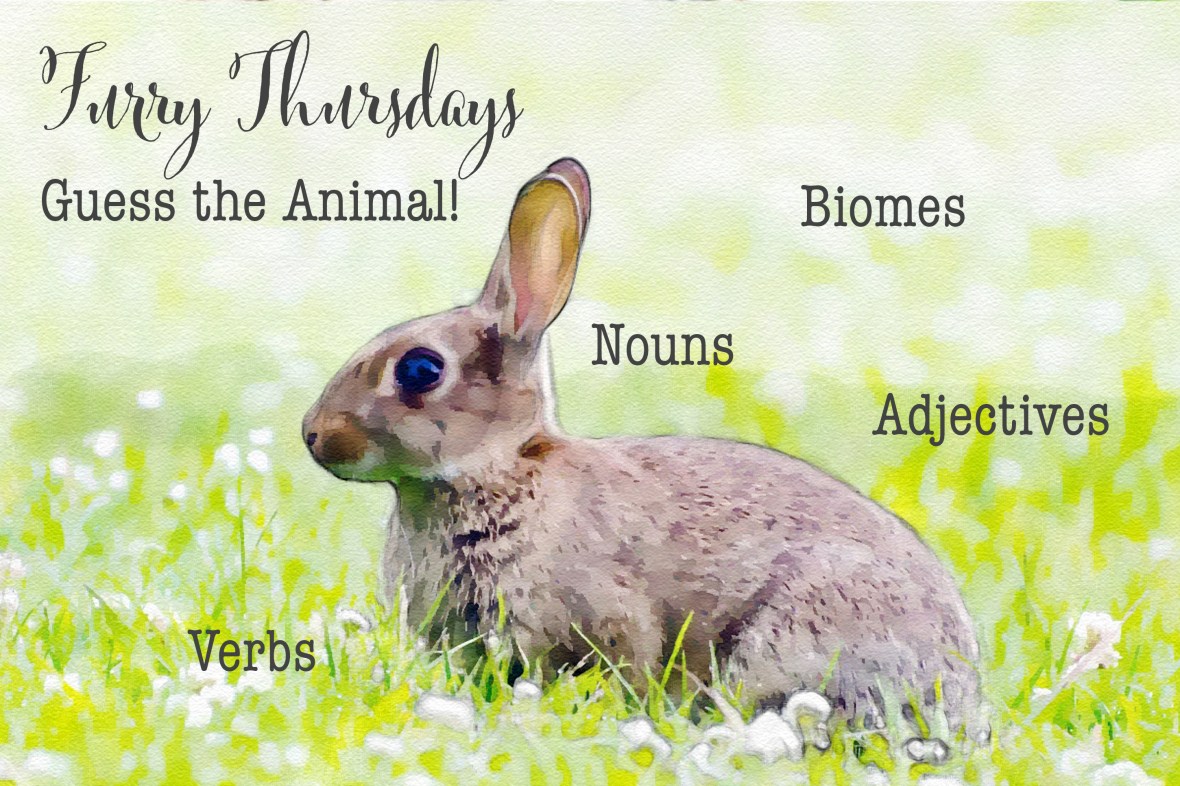
Furry Thursday starts tomorrow!  Smash up science and English parts of speech together with this guessing game! Each week I’ll share a group of nouns, adjectives, and verbs plus a biome or two. Players will guess the animal based on the words. When you’re finished guessing, draw the animal and the words for drawing and copy-work practice!

Furry Thursday rabbit

Poetry Tuesday

Rhyming, Poem Study, Haiku

Hello! Welcome to Poetry Tuesday: the day we dip (or dive) into the lovely world of poetry!

Each Tuesday from June 19 to September 4th, I’ll share a fun poetry activity plus a poem study for all ages, as well as an advanced poetry lesson for ages 14 and up. Feel free to enjoy one, two, or all three of these fun resources! Scroll down to find the Poem Study and the Advanced Poetry Lesson.

Fun Poetry Activity: All About Rhyming
(for kids, adults, and everyone in between!)

“Did you ever have a time when you couldn’t make a rhyme… down by the bay?”

Jillions of poems rhyme, especially poems written for children. In future weeks we’ll get to read some of those poems, make observations about them, and even write our own. So what is a rhyme?

1. Identifying rhymes:
Read these words aloud:
Cat, sat, bat, that, flat, pat, splat, mat, hat, muskrat, fat

Notice anything about this group of words?
That’s right! They all rhyme.
These are all words that rhyme with the word cat.Did you notice how the end sound of each word sounds the same? Cat, Sat, Bat etc.

Let’s try another word: in.
in, bin, sin, grin, pin, win, chin, fin, thin, tin, spin, twin, sheepskin, tailspin

Do you hear how similar they sound? They all have different sounds at the beginning but the end of the words all sound the same.

2. Practicing Rhymes:

Your turn!
Can you find at least one rhyme for each of these words? See how many you can come up with!

1. up
2. sad
3. hug
4. bog
5. eat
6. light
7. stay
8. tail
9. bell
10. ash

3. Writing rhyming sentences:
Would you like to do some more??
Try writing a sentence using mostly words that rhyme.

For example:
Bill still feels ill from his fill of gills on the grill.

Need a word to get you started? Try one of these:
cat
pickle
trip
fly

Need help rhyming your words? Try using a rhyming dictionary! There’s one online at:
https://www.rhymer.com/

If you come up with an especially fun sentence, share it in the comments below!

Poem study:

Let’s read a poem and study it together!
Not sure how to study a poem? Here are some ideas. Choose one or all of these:

  1. Read aloud and enjoy the poem
  2. Neatly write out your favorite stanza for handwriting practice or…
  3. Print out the poem by copying it into your word processor
  4. Draw a picture about the poem
  5. Circle the words that rhyme!
  6. Read more about the author’s life
  7. Share with someone you love <3

Twinkle, Twinkle, Little Star

Twinkle, twinkle, little star,
How I wonder what you are!
Up above the world so high,
Like a diamond in the sky.

When this blazing sun is gone,
When he nothing shines upon,
Then you show your little light,
Twinkle, twinkle, through the night.

Then the traveller in the dark
Thanks you for your tiny spark;
He could not see where to go,
If you did not twinkle so.

In the dark blue sky you keep,
And often through my curtains peep,
For you never shut your eye
Till the sun is in the sky.

As your bright and tiny spark
Lights the traveller in the dark,
Though I know not what you are,
Twinkle, twinkle, little star.

Jane Taylor

Twinkle Twinkle Little Star

Advanced Poetry Lesson

The next two Tuesdays we will learn and practice the ancient art of Haiku.

A few things to understand about Haiku:

  1. Haiku are originally a form of Japanese poetry.
  2. Haiku are short, only having 3 lines
  3. They have no rhyme
  4. They have a 5-7-5 syllable structure (see below!)
  5. Each poem captures a moment
  6. Haiku poems show the world like it is (concrete, rather than abstract)
  7. They usually contain something from nature and a word that shows what season it is
  8. They often leave you feeling thoughtful

Great! So… how do you write them?

It might help to talk about the structure of the poem. It’s hard to build a building without structure, isn’t it? So what is the structure of a Haiku?

A. Syllables
1st line: 5 syllables
2nd line: 7 syllables
3rd line: 5 syllables

For example…


Whitecaps on the bay:
A broken signboard banging
In the April wind.

— Richard Wright

Oftentimes Haiku poems follow the 5-7-5 syllable rule in Japanese but once they’re translated into English, the structure has to change a little. (Note: See the seasonal word here? April)

B. Two Images
Haiku are often made of two different thoughts or images. One thought or image is across two lines and the other is across one. For example:

new pond—
the first tadpole
wriggles over clean stones

-Christopher Herold

“New pond” is one thought, and “the first tadpole wriggles over clean stones” is the second thought. See how the second thought takes up two lines?

C.  A Cut
Another aspect of Haiku it that they usually contain a cut, or break, somewhere in the poem. For example:

summer grasses—
all that remains
of a warriors’ dreams

-Matsuo Basho (1644-1694)

See the cut after the first line?

Ready to write a Haiku?

I suggest finding a quiet place and thinking about your surroundings. If you can go outside, great! Try to describe, using a haiku, what you see, hear, smell, feel, or taste in two different images. It can be a little tricky, but the result is often surprisingly lovely.

Love your Haiku and want to share? Share it in the comments below!

Want to learn more or understand Haiku better?
Here’s a great video on YouTube that I thought expressed the topic well.
https://youtu.be/yUDuRwKwh8k

 

Blog

Summer Writing Activities Are Here!

Summer Writing Activities

Looking for fun writing activities for kids, adults, and everyone in between?  You’ve come to the right place! I’ve spent hours of inside, outside, on-the-bed, under-the-covers, at-the-kitchen-counter time crafting a set of daily writing activities for the Summer, starting June 18 and ending September 3, 2018. I’m not sure what’s more exciting, the fact that they’re all free, or the enjoyment of working on them together! (Note: Have little ones? Read about how to include them in writing activities here.)

What do I have in store? An activity for every weekday for twelve weeks starting today. Pick and choose or do them all!

Fun List Monday

Fun List Mondays- Write a list with me! Every Monday I will post a fun list. For example: Five Foods I Like and One I Don’t. Fill out your list and enjoy it by yourself, share it in the comments, on my Facebook page, or on Twitter (with the hashtag #FunListMondays). Not convinced? Read about how lists encourage better writing here.

Poetry Tuesday

Poetry Tuesdays- Dip (or dive) into the lovely world of poetry! Each Tuesday, I’ll share a fun poetry activity plus a poem study for all ages, as well as an advanced poetry lesson for ages 14 and up. Enjoy one, two, or all three of guided resources.


Freewrite Wednesdays

Freewrite Wednesdays- Grab a pencil, a piece of paper, and a timer and see if you can put the stuff in your head down on the page! Each week I’ll have a freewrite topic to get you started, as well as prompt questions in case you get stuck.


Furry Thursday chipmunk

Furry Thursdays- Smash up science and English parts of speech together with this guessing game! Each week I’ll share a group of nouns, adjectives, and verbs plus a biome or two. Players will guess the animal based on the words. When you’re finished guessing, draw the animal and the words for drawing and copy-work practice.

Friday Story Share

Friday Story Share- Ready to share your stories? Write a story, send it in by Thursday at midnight and I will draw one out of the pot to share on the Story Share section of the website the following Friday!

Join in the fun! Fill your summer with the joy of writing.

Story Share Topic!

Friday Story Share Topic

Ready for this week’s Story Share Topic? Join in the fun and send in your story by this Thursday at midnight! I will draw a story out of the pot to share on this website next Friday!

Send to: FridayStoryShare@gmail.com

Write a story in which the character can only eat one type of food.

Some questions to ask yourself: How did this happen in this character’s life? Why is this a problem? Who or what eventually solves the problem? What happens as a result? Keep your story between 100-1000 words. I absolutely can’t wait to read these!

Rules:
Stories should be 100-1000 words and should be appropriate for all audiences.
Keep your own and others’ privacy in mind. Don’t share anything that would embarrass you or the people you know! You also don’t want to share part of a story that you plan to publish some day, and don’t share someone else’s story!

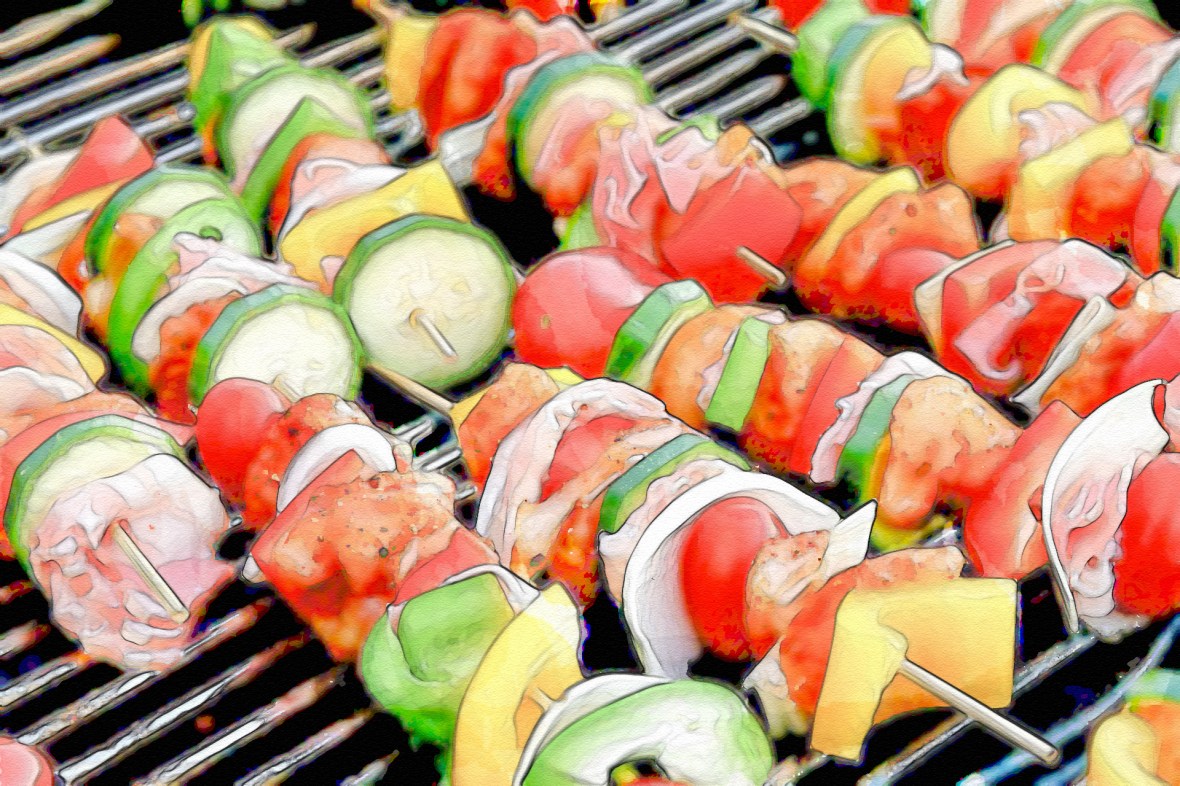
edit food shish-kebab-417994_1920

Fun List Mondays

Five Foods I Love to Eat (And One I Don’t)

Everyone has different tastes in food. While I love spinach salad, cooked Normandy vegetables, aged cheddar cheese, and ribeye steak, my children don’t always appreciate my culinary adventures. What about you? What do you love to eat? Set a timer for ten minutes, write out your answer and admire it yourself, share in the comments below or on Twitter with hashtag #FunListMonday. Add my username so I’ll see it! @HannahSpuler

edit food roast-pork-2273819_1920 copy


Blog

Writing Cookies

Becoming a children’s author is sort of like opening a bakery… except it’s nothing like it at all. In this strange new world of 21st century publishing, before authors share any of their treasured writings, they need to establish a following online. In other words, before I even bake the cookies (which are a special, secret kind of cookie), I have to start parading around the street with my baker’s hat so people know I make cookies. Even though no one’s allowed to eat any of them yet. Or taste them. Or look at them.

writing with cookies-1372607_1920 copy

And then when curious people ask me what kind of cookies I make, I have to smile mysteriously and say, “Just you wait. They’ll be amazing! They will taste delicious (I hope)! And the secret recipe has flour, sugar, butter, and some other kind of magic chocolate bean grown in equatorial fairy tales.” 

Because if no one knows I bake, then no one will buy the cookies.

So this is me, telling you that I’m a baker—errr, writer. I love to write. I love to grab my laptop and sit on my couch, on my counter, on my bed, in the sun with a blanket on my favorite patio chair. I love to write (for a few minutes) in a field of grasshoppers that sing woody songs to me while the mosquitos nibble at my legs. In the evening, I love to hug and kiss the little people living in my house, grab my notebooks and hide in the schoolroom with the light turned low, trying to find the most whimsical word that rhymes with “hoot” (because owls) and occasionally yelling up the stairs, “Go back to bed!”

As a musician, my inner song informs the rhythm of the words I write. As an artist, the pictures in my head transform into words and fill the paper, lest they disappear forever into the place where all lost thoughts go, the junction between Wonderland and Never-Never Land.

Writing is the trap door for all the imaginative ideas in my head, the meaningful sentiments of my heart, the pieces that would otherwise stay hidden, unused. And with a finished product, I have a chance to contribute something good and lovely to the world that would otherwise be short one fantastically delicious cookie— I mean, book.

News

Bright Beginnings

Here I am, at the start of my writing adventure! Can you smell the morning air?

There are currently three roads I’m traveling on at the same time. (Sounds tricky, doesn’t it?)

  1. Self-publishing. As you read this, two fantastic illustrators are already working hard to bring my first two picture-book manuscripts to life. Illustrating is a process unique to the individual illustrator, so shhhh, don’t distract them! My job as they brainstorm and think through character drawings (before we story-board it) is to make sure my manuscripts are exactly the way I want them. Self-publishing is its own kind of journey and the process is tailored to the individual.
  2. Agent Querying. On a completely different path, I’m currently working seriously on two other picture books that I would like to perfect to the point of sending to an agent. An agent is the professional between an author and a publisher. Before you land a sale with a large publishing company, you need to find an agent that likes you. Before I find an agent that likes me, I have to polish my writing so I have something to sell. So on both paths, it really comes down to polishing my writing! 
  3. Website Launch. Not only am I launching my website, I also wrote a set of Summer Writing Activities, one for every weekday over the course of 12 weeks, in order to share here on my website. I’m looking forward to using these for myself and my children, and hoping others of all ages will join in!

Here are some steps I’ve taken so far:

  1. Praying. As I’ve prayed and taken forward steps, it’s been evident that the Lord’s been leading me this direction. I won’t pretend I know where it leads, but I’m enjoying the journey so far!
  2. Becoming a member of the Society of Children’s Book Writers and Illustrators. By joining I’m establishing that I’m serious. It’s also already offered me boatloads of resources as I pursue writing for children.
  3. Creating a website. Hi there!
  4. Starting up my twitter account and Facebook writer’s page.
  5. Beginning the process of finding an official critique group that meets regularly. I’ve observed a Skype group that I enjoyed tremendously, but they may be full, so we’ll see.

That’s it for my news. Thanks for your support! I’m pretty sure if you made it to the bottom of the page, you’re genuinely interested. I hope to share more in the future!