Poetry Tuesday

Poem Study: My Shadow

Let’s read a poem and study it together!

edit shadow little-2176130_1920

Not sure how to study a poem? Here are some ideas! Choose one or all of these:

  1. Read aloud and enjoy the poem
  2. Neatly write out your favorite stanza for handwriting practice or…
  3. Copy and paste the poem into your word processor and print it out
  4. Draw a picture about the poem
  5. Circle or color-code the words that rhyme. (Learn about rhyme here!)
  6. Read more about the author’s life
  7. Share with someone you love <3

My Shadow

I have a little shadow that goes in and out with me,
And what can be the use of him is more than I can see.
He is very, very like me from the heels up to the head;
And I see him jump before me, when I jump into my bed.

The funniest thing about him is the way he likes to grow—
Not at all like proper children, which is always very slow;
For he sometimes shoots up taller like an india-rubber ball,
And he sometimes gets so little that there’s none of him at all.

He hasn’t got a notion of how children ought to play,
And can only make a fool of me in every sort of way.
He stays so close besides me, he’s a coward, you can see;
I’d think shame to stick to nurse as that shadow sticks to me!

One morning, very early, before the sun was up,
I rose and found the shining dew on every buttercup;
But my lazy little shadow, like an arrant sleepy-head,
Had stayed at home behind me and was fast asleep in bed.

~Robert Louis Stevenson


Hungry for more? Check out…

Poetry Activity (for kids, adults, and everyone in between): Write Your Own Nursery Rhymes

Advanced Poetry Lesson: Odes (Week 1 of 2)

Poetry Tuesday

Advanced Poetry Lesson: Odes

Let’s write some poetry!

The next two Tuesdays we’ll be learning about Odes!

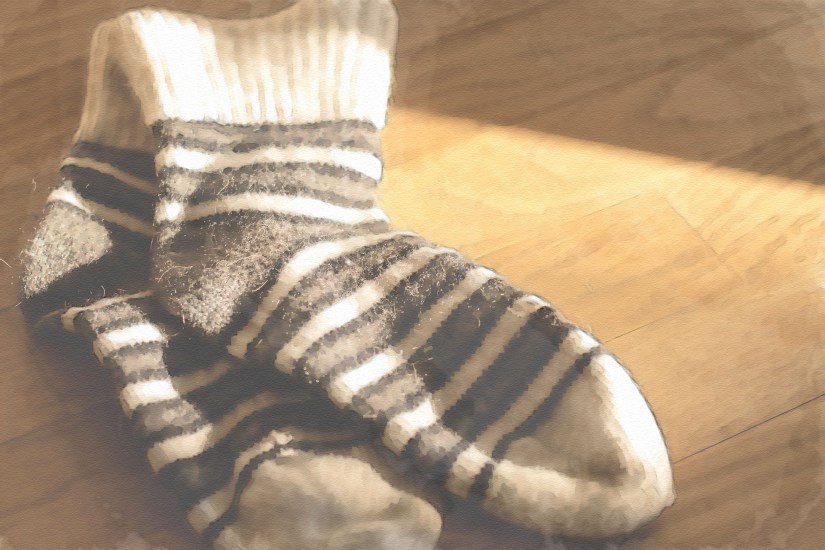
socks

A. Introduction to Odes:
An ode is a poem that celebrates or appreciates something or someone.

For example…
John Keats wrote an Ode to a Nightingale.
Pablo Neruda wrote an Ode To Sadness.
Samuel Taylor Coleridge wrote an Ode about France.
There is an Ode to Silence, by Edna St. Vincent Millay.
William Wordsworth wrote an Ode to Duty.
There’s even an Ode To a Large Tuna in the Market by 
Pablo Neruda, who’s known for writing odes to unusual subjects.

Here’s part of an ode written by Pablo Neruda about a pair of socks (Translated by Robert Bly)

Ode to My Socks (lines 47-52)

“…The moral
of my ode is this:
beauty is twice
beauty
and what is good is doubly
good
when it is a matter of two socks
made of wool
in winter.”

B. All About Odes

  1. An ode is about loving, appreciating, or celebrating someone or something
  2. An ode is full of emotion, strong images, and descriptive words
  3. An ode can rhyme
  4. An ode is usually quite serious but it can be silly if the ode is more of a joke


C. Reading Odes

As you read the following excerpts, ask yourself:
~What is the poet celebrating or admiring?
~Does the poem rhyme?
~Does it have strong imagery?

Ode to the West Wind (excerpt)
O wild West Wind, thou breath of Autumn’s being,
Thou, from whose unseen presence the leaves dead
Are driven, like ghosts form an enchanter fleeing,
Yellow, and black, and pale, and hectic red,
Pestilence-stricken multitudes: O thou,
Who chariotest to their dark wintry bed
The winged seeds, where they lie cold and low,
Each like a corpse within its grave, until
Thine azure sister of the Spring shall blow…”
   ~Percy Bysshe Shelley

The Blue Swallows
Across the millstream below the bridge
Seven blue swallows divide the air
In shapes invisible and evanescent,
Kaleidoscopic beyond the mind’s
Or memory’s power to keep them there.

“History is where tensions were,”
“Form is the diagram of forces.”
Thus, helplessly, there on the bridge,
While gazing down upon those birds—
How strange, to be above the birds!—
Thus helplessly the mind in its brain
Weaves up relation’s spindrift web,
Seeing the swallows’ tails as nibs
Dipped in invisible ink, writing…”
~Howard Nemerov


D. Writing An Ode
Your turn to write an ode!

Think of something or someone that you love and want to celebrate!
Try writing a short one to start (5 lines or so) and then grow it to 7 or 10 as you have more to say. If you’re a more experienced writer, see if you can make it 15-30 lines! If you like rhyming, go for it, but remember that not every ode has to rhyme.

E. Advanced: More About Odes:
For the purposes of this quick, fun, introduction, I’ve only talked about odes in general, but if you’re interested, look into the specific kinds of odes:
Pindaric
Horatian
Irregular

There are also different  ode parts:
The strophe
The antistrophe
The epode

Pleased with your ode? Share it on my Facebook page or in the comments!

Hungry for more? Check out this week’s…

Poetry Activity (for kids, adults, and everyone in between): Write Your Own Nursery Rhymes

Poem Study: My Shadow, by Robert Louis Stevenson

Poetry Tuesday

Advanced Poetry Lesson: Haiku

Let’s write some poetry!

This week and last week we are learning the ancient art of Haiku!

edit haiku water-lily-1857350_1920 copy

Have you ever heard of a Haiku? Sometimes you just have to dive into to a form in order to appreciate it.

A few things to understand about Haiku:

  1. Haiku are Japanese
  2. Haiku are short, only having 3 lines
  3. They have no rhyme
  4. Each poem captures a moment
  5. Haiku poems show the world like it is (concrete, rather than abstract)
  6. They usually contain something from nature
  7. They often leave you feeling thoughtful

Great! So… how do you write them?

Let’s talk about the structure of the poem! It’s hard to build a building without structure, isn’t it? It would just fall over. So what is the structure of a Haiku?

A. Syllables
1st line: 5 syllables
2nd line: 7 syllables
3rd line: 5 syllables

For example…

Whitecaps on the bay:
A broken signboard banging
In the April wind.
— Richard Wright

B.  Two Images
Haiku are often made of two different thoughts or images. One thought or image is across two lines and the other is across one. For example:

new pond—
the first tadpole
wriggles over clean stones
—Christopher Herold

“New pond” is one thought, and “the first tadpole wriggles over clean stones” is the second thought. See how the second thought takes up two lines?

C.  A Cut
Another aspect of Haiku it that they usually contain a cut, or break, somewhere in the poem. For example:

summer grasses—
all that remains
of a warriors’ dreams
—Matsuo Basho (1644-1694)

See the cut after the first line?

Okay, ready to write a Haiku?

I suggest finding a quiet place and thinking about your surroundings. If you can go outside, great! Try to describe, using a haiku, what you see, hear, smell, feel, or taste in two different images. It can be a little tricky, but the result is surprisingly lovely.

Hungry for more? Check out this week’s…

Poetry Activity (for kids, adults, and everyone in between): All About Meter

Poem Study: The Violet, by Jane Taylor

Poetry Tuesday

Rhyming, Poem Study, Haiku

Hello! Welcome to Poetry Tuesday: the day we dip (or dive) into the lovely world of poetry!

Each Tuesday from June 19 to September 4th, I’ll share a fun poetry activity plus a poem study for all ages, as well as an advanced poetry lesson for ages 14 and up. Feel free to enjoy one, two, or all three of these fun resources! Scroll down to find the Poem Study and the Advanced Poetry Lesson.

Fun Poetry Activity: All About Rhyming
(for kids, adults, and everyone in between!)

“Did you ever have a time when you couldn’t make a rhyme… down by the bay?”

Jillions of poems rhyme, especially poems written for children. In future weeks we’ll get to read some of those poems, make observations about them, and even write our own. So what is a rhyme?

1. Identifying rhymes:
Read these words aloud:
Cat, sat, bat, that, flat, pat, splat, mat, hat, muskrat, fat

Notice anything about this group of words?
That’s right! They all rhyme.
These are all words that rhyme with the word cat.Did you notice how the end sound of each word sounds the same? Cat, Sat, Bat etc.

Let’s try another word: in.
in, bin, sin, grin, pin, win, chin, fin, thin, tin, spin, twin, sheepskin, tailspin

Do you hear how similar they sound? They all have different sounds at the beginning but the end of the words all sound the same.

2. Practicing Rhymes:

Your turn!
Can you find at least one rhyme for each of these words? See how many you can come up with!

1. up
2. sad
3. hug
4. bog
5. eat
6. light
7. stay
8. tail
9. bell
10. ash

3. Writing rhyming sentences:
Would you like to do some more??
Try writing a sentence using mostly words that rhyme.

For example:
Bill still feels ill from his fill of gills on the grill.

Need a word to get you started? Try one of these:
cat
pickle
trip
fly

Need help rhyming your words? Try using a rhyming dictionary! There’s one online at:
https://www.rhymer.com/

If you come up with an especially fun sentence, share it in the comments below!

Poem study:

Let’s read a poem and study it together!
Not sure how to study a poem? Here are some ideas. Choose one or all of these:

  1. Read aloud and enjoy the poem
  2. Neatly write out your favorite stanza for handwriting practice or…
  3. Print out the poem by copying it into your word processor
  4. Draw a picture about the poem
  5. Circle the words that rhyme!
  6. Read more about the author’s life
  7. Share with someone you love <3

Twinkle, Twinkle, Little Star

Twinkle, twinkle, little star,
How I wonder what you are!
Up above the world so high,
Like a diamond in the sky.

When this blazing sun is gone,
When he nothing shines upon,
Then you show your little light,
Twinkle, twinkle, through the night.

Then the traveller in the dark
Thanks you for your tiny spark;
He could not see where to go,
If you did not twinkle so.

In the dark blue sky you keep,
And often through my curtains peep,
For you never shut your eye
Till the sun is in the sky.

As your bright and tiny spark
Lights the traveller in the dark,
Though I know not what you are,
Twinkle, twinkle, little star.

Jane Taylor

Twinkle Twinkle Little Star

Advanced Poetry Lesson

The next two Tuesdays we will learn and practice the ancient art of Haiku.

A few things to understand about Haiku:

  1. Haiku are originally a form of Japanese poetry.
  2. Haiku are short, only having 3 lines
  3. They have no rhyme
  4. They have a 5-7-5 syllable structure (see below!)
  5. Each poem captures a moment
  6. Haiku poems show the world like it is (concrete, rather than abstract)
  7. They usually contain something from nature and a word that shows what season it is
  8. They often leave you feeling thoughtful

Great! So… how do you write them?

It might help to talk about the structure of the poem. It’s hard to build a building without structure, isn’t it? So what is the structure of a Haiku?

A. Syllables
1st line: 5 syllables
2nd line: 7 syllables
3rd line: 5 syllables

For example…


Whitecaps on the bay:
A broken signboard banging
In the April wind.

— Richard Wright

Oftentimes Haiku poems follow the 5-7-5 syllable rule in Japanese but once they’re translated into English, the structure has to change a little. (Note: See the seasonal word here? April)

B. Two Images
Haiku are often made of two different thoughts or images. One thought or image is across two lines and the other is across one. For example:

new pond—
the first tadpole
wriggles over clean stones

-Christopher Herold

“New pond” is one thought, and “the first tadpole wriggles over clean stones” is the second thought. See how the second thought takes up two lines?

C.  A Cut
Another aspect of Haiku it that they usually contain a cut, or break, somewhere in the poem. For example:

summer grasses—
all that remains
of a warriors’ dreams

-Matsuo Basho (1644-1694)

See the cut after the first line?

Ready to write a Haiku?

I suggest finding a quiet place and thinking about your surroundings. If you can go outside, great! Try to describe, using a haiku, what you see, hear, smell, feel, or taste in two different images. It can be a little tricky, but the result is often surprisingly lovely.

Love your Haiku and want to share? Share it in the comments below!

Want to learn more or understand Haiku better?
Here’s a great video on YouTube that I thought expressed the topic well.
https://youtu.be/yUDuRwKwh8k

 

Blog

Summer Writing Activities Are Here!

Summer Writing Activities

Looking for fun writing activities for kids, adults, and everyone in between?  You’ve come to the right place! I’ve spent hours of inside, outside, on-the-bed, under-the-covers, at-the-kitchen-counter time crafting a set of daily writing activities for the Summer, starting June 18 and ending September 3, 2018. I’m not sure what’s more exciting, the fact that they’re all free, or the enjoyment of working on them together! (Note: Have little ones? Read about how to include them in writing activities here.)

What do I have in store? An activity for every weekday for twelve weeks starting today. Pick and choose or do them all!

Fun List Monday

Fun List Mondays- Write a list with me! Every Monday I will post a fun list. For example: Five Foods I Like and One I Don’t. Fill out your list and enjoy it by yourself, share it in the comments, on my Facebook page, or on Twitter (with the hashtag #FunListMondays). Not convinced? Read about how lists encourage better writing here.

Poetry Tuesday

Poetry Tuesdays- Dip (or dive) into the lovely world of poetry! Each Tuesday, I’ll share a fun poetry activity plus a poem study for all ages, as well as an advanced poetry lesson for ages 14 and up. Enjoy one, two, or all three of guided resources.


Freewrite Wednesdays

Freewrite Wednesdays- Grab a pencil, a piece of paper, and a timer and see if you can put the stuff in your head down on the page! Each week I’ll have a freewrite topic to get you started, as well as prompt questions in case you get stuck.


Furry Thursday chipmunk

Furry Thursdays- Smash up science and English parts of speech together with this guessing game! Each week I’ll share a group of nouns, adjectives, and verbs plus a biome or two. Players will guess the animal based on the words. When you’re finished guessing, draw the animal and the words for drawing and copy-work practice.

Friday Story Share

Friday Story Share- Ready to share your stories? Write a story, send it in by Thursday at midnight and I will draw one out of the pot to share on the Story Share section of the website the following Friday!

Join in the fun! Fill your summer with the joy of writing.