Furry Thursday

Furry Thursday, No. 2

Can you guess the animal based on the clues?
Smash up science and English parts of speech together with this guessing game!

adjectives: furry, grizzly, hefty, strong, fast, dangerous, brown or black or white
verbs: Hunt, fish, paw, lumber, stand, crawl, attack, sniff, growl
nouns: Mama, Papa, Baby, honey, berries, fish, cave, claws, omnivore
biomes: Tundra (Cold), Deciduous Forest, Woodlands, Desert Edge, Temperate Forests

Think you know which animal?
Click here for the answer!

Simplified definitions:
Adjective: a describing word, placed before a noun (or pronoun)
Noun: 
a person, place, thing, or idea
Verb: 
an action word
Biome:
the type of environment where living things make their homes, a habitat (ex: desert, rainforest, tundra)
herbivore:
plant-eater
carnivore:
meat-eater
omnivore:
eats both plants and meat

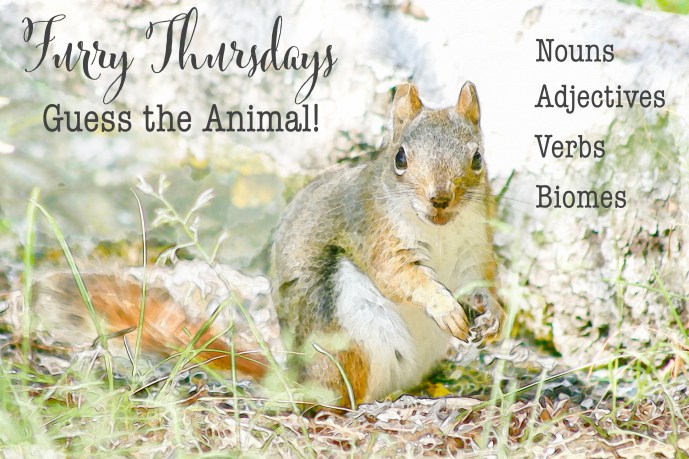
Furry Thursday chipmunk

Freewrite Wednesday

Freewrite Wednesday: Imagine You are a Bird

Ready to free your writing? Let’s do a freewrite together!

edit bird-3158784_1920
Imagine you are a bird. Write about your experience!
Questions to get you started:
What does it feel like to fly? Where would you live? What would it be like with your five senses: Sight, hearing, smell, taste, touch? What problems might you face?

Set your timer for 10 minutes and write, write, write!

About Freewrites: A freewrite is exactly what it sounds like: free! Use a freewrite to practice channeling thoughts from your mind to the paper. Never done a freewrite? Learn more in my Guide to Freewriting 

Poetry Tuesday

Advanced Poetry Lesson: Haiku

Let’s write some poetry!

This week and last week we are learning the ancient art of Haiku!

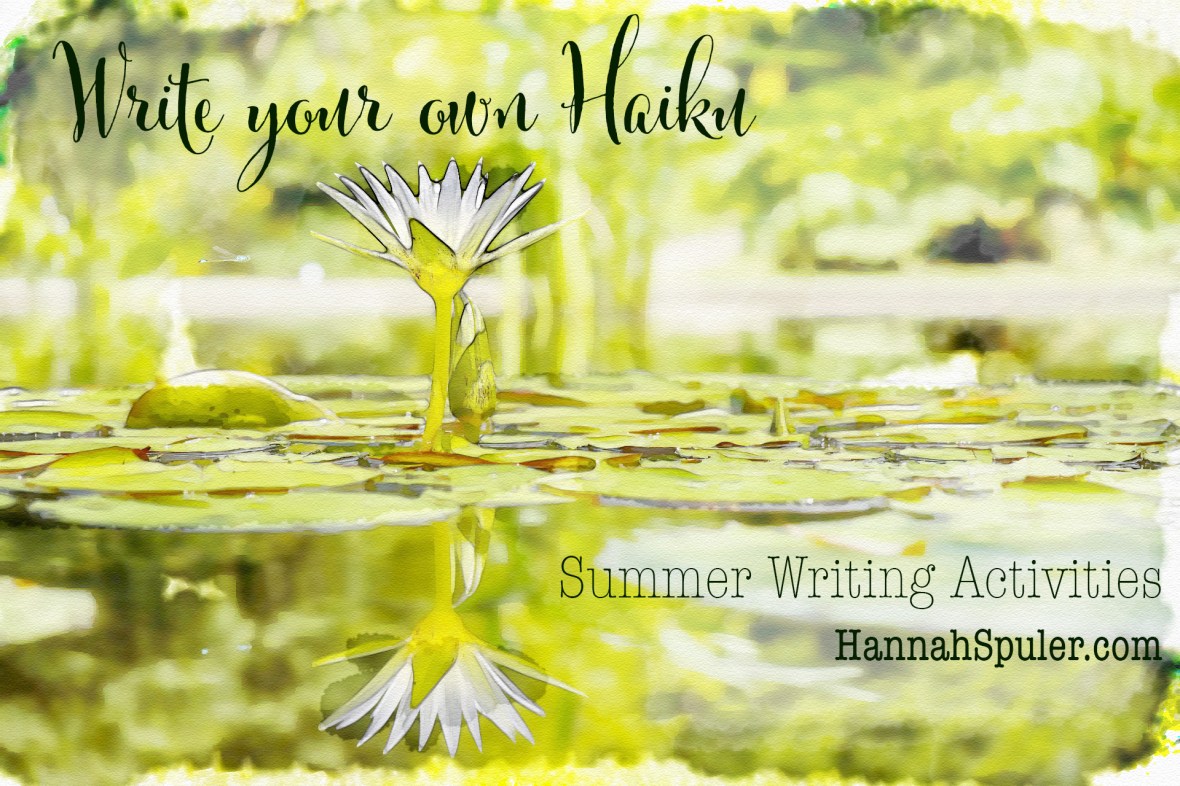
edit haiku water-lily-1857350_1920 copy

Have you ever heard of a Haiku? Sometimes you just have to dive into to a form in order to appreciate it.

A few things to understand about Haiku:

  1. Haiku are Japanese
  2. Haiku are short, only having 3 lines
  3. They have no rhyme
  4. Each poem captures a moment
  5. Haiku poems show the world like it is (concrete, rather than abstract)
  6. They usually contain something from nature
  7. They often leave you feeling thoughtful

Great! So… how do you write them?

Let’s talk about the structure of the poem! It’s hard to build a building without structure, isn’t it? It would just fall over. So what is the structure of a Haiku?

A. Syllables
1st line: 5 syllables
2nd line: 7 syllables
3rd line: 5 syllables

For example…

Whitecaps on the bay:
A broken signboard banging
In the April wind.
— Richard Wright

B.  Two Images
Haiku are often made of two different thoughts or images. One thought or image is across two lines and the other is across one. For example:

new pond—
the first tadpole
wriggles over clean stones
—Christopher Herold

“New pond” is one thought, and “the first tadpole wriggles over clean stones” is the second thought. See how the second thought takes up two lines?

C.  A Cut
Another aspect of Haiku it that they usually contain a cut, or break, somewhere in the poem. For example:

summer grasses—
all that remains
of a warriors’ dreams
—Matsuo Basho (1644-1694)

See the cut after the first line?

Okay, ready to write a Haiku?

I suggest finding a quiet place and thinking about your surroundings. If you can go outside, great! Try to describe, using a haiku, what you see, hear, smell, feel, or taste in two different images. It can be a little tricky, but the result is surprisingly lovely.

Hungry for more? Check out this week’s…

Poetry Activity (for kids, adults, and everyone in between): All About Meter

Poem Study: The Violet, by Jane Taylor

Poetry Tuesday

Poem Study: The Violet

Let’s read a poem and study it together!

edit violet flower-3408376_1920

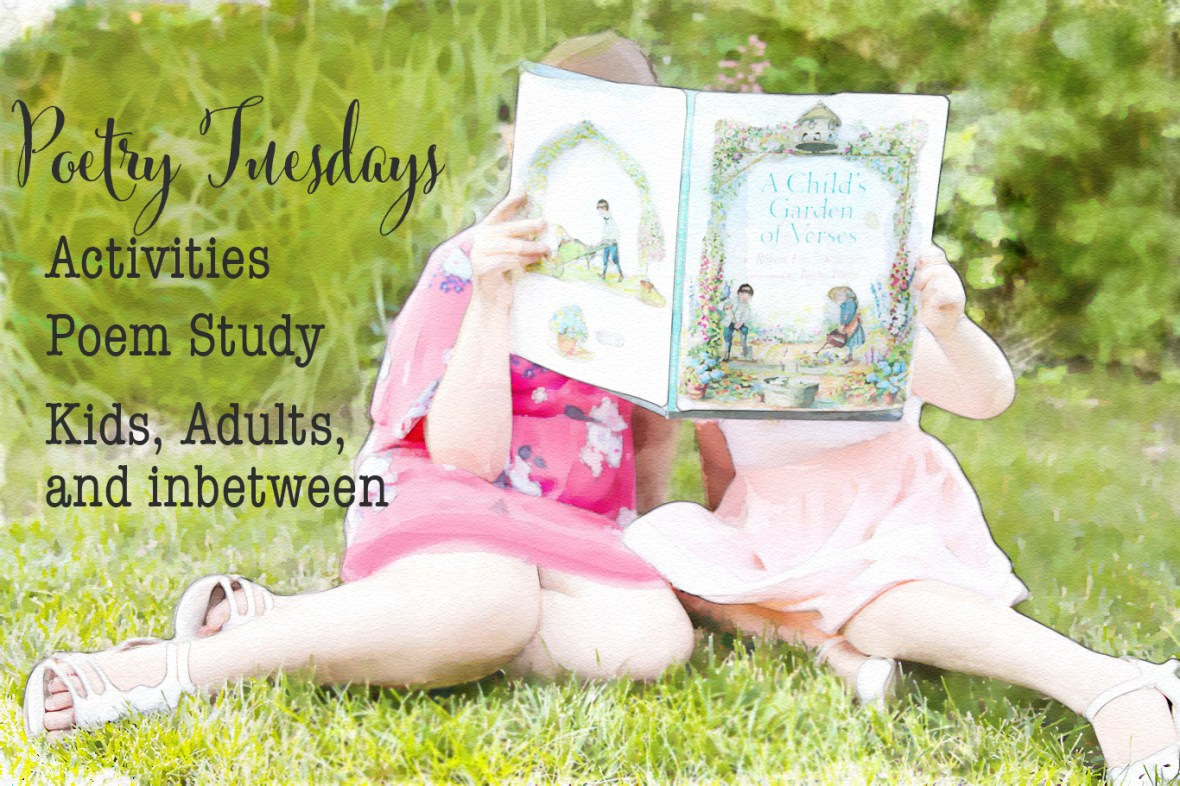
Not sure how to study a poem? Here are some ideas! Choose one or all of these:

  1. Read aloud and enjoy the poem
  2. Neatly write out your favorite stanza for handwriting practice or…
  3. Print out the poem here
  4. Draw a picture about the poem
  5. Circle the words that are stressed, or on the beat. (Learn about meter here!)
  6. Read more about the author’s life
  7. Share with someone you love <3


The Violet

Down in a green and shady bed
A modest violet grew;
Its stalk was bent, it hung its head,
As if to hide from view.

And yet it was a lovely flower,
No colors bright and fair;
It might have graced a rosy bower,
Instead of hiding there.

Yet it was content to bloom,
In modest tints arrayed;
And there diffused its sweet perfume,
Within the silent shade.

Then let me to the valley go,
This pretty flower to see;
That I may also learn to grow
In sweet humility.

~Jane Taylor


Hungry for more? Check out…

Poetry Activity (for kids, adults, and everyone in between): All About Meter

Advanced Poetry Lesson: Haiku, Week 2

Poetry Tuesday

Poetry Activity: All About Meter

Interested in poetry?
Learn about meter with this activity for kids, adults, and everyone in-between!

drum
1. Introduction to Meter:
Many poems use something called meter. What is meter? Meter is like the rhythm of a poem. The meter is why you sometimes want to move your head up and down when you sing catchy songs or certain children’s poetry. Let me show you what I mean…

Try saying this out loud as steadily as you can.

1-2-3-4
1-2-3-4

Pretty easy, right? And a little tedious, maybe.
Do it again and clap this time!

1-2-3-4
1-2-3-4

Okay, now read this with the same rhythm:

fish, bird, cat, dog
fox, pig, rat, frog

(Did you notice something special about those two lines? They rhymed! For more about rhymes, click here)

Each of those lines has 4 beats (also called stresses). What if we added some words? Would that change the meter? Not necessarily.

The fish, the bird, the cat, and the dog,
The fox, the pig, the rat, and the frog

Do you hear the beat in those words? The meter actually stayed the same! Even though there are more words, the meter actually didn’t change one little bit.

2. Meter in Poetry:
Here are some lines of poetry. Some of them have 3 beats, some of them have 4. Try reading the bold words just a little bit louder so you can hear the meter!

The Violet
Down in a green and shady bed  (4 beats)
A modest violet grew; (3 beats)
Its stalk was bent, it hung its head, (4 beats)
As if to hide from view. (3 beats)
~Jane Taylor (lines 1-4)

Twinkle Twinkle, Little Star
Twinkle
, Twinkle, little star! (4 beats)
How I wonder what you are, (4 beats)
Up above the world so high, (4 beats)
Like a diamond in the sky. (4 beats)
~Jane Taylor (lines 1-4)

3. Practicing Meter:
Now you try! See if you can find the beats (stresses) in The Violet. Print it out here and circle or highlight the beats:  The Violet

Hungry for more? Check out this week’s…

Poem Study: The Violet, by Jane Taylor
Advanced Poetry Lesson: Haiku, Week 2

Poetry Tuesday

Poetry Tuesday! June 26

Hello! Welcome to Poetry Tuesday: the day we dip (or dive) into the lovely world of poetry!

Each Tuesday from June 19 to August 21, 2018, I’ll share a Poetry Activity, a Poem Study, plus an Advanced Poetry Lesson. Feel free to enjoy one, two, or all three of these fun resources! (Click on the title links)

Poetry Activity (for kids, adults, and everyone in between): All About Meter

Poem Study: The Violet, by Jane Taylor

Advanced Poetry Lesson: Haiku, Week 2

Poetry Tuesday

Fun List Mondays, Uncategorized

What are Six Things You Like About Summer (And Two You Don’t)?

Fun List Monday June 25!

Ahh summer… The swimming, the warm air, the relaxed schedule, the popsicles! When I think of Summer, I think freedom. What about you? I can’t wait to hear what you enjoy about this fantastic season.

edit summer pretty-woman-1509956_1920 (1)

Write a list with me! Every Monday I will post a fun list. Fill out your list and enjoy it by yourself, share it on my Facebook page, in the comments or on Twitter (with the hashtag #FunListMondays). Not convinced? Read about how lists encourage better writing here.

Like this activity? See other Fun List Mondays here.

Story Share Topic!

Friday Story Share Topic 2

Ready for next week’s Story Share Topic? Join in the fun and send in your story by next Friday, June 29, for a chance to appear on the website on Friday, July 6.

edit summer pretty-woman-1509956_1920 (1)
Write a story about a summer adventure.

Some questions to ask yourself: Where does it take place? Who are the characters? Try to make the Summer an important part of the story. Write between 100 and 1000 words and share away! I feel warm and summery just thinking about these awesome stories.

As submissions allow, I will share three stories on my website next Friday, one from each age category! The age categories are:
12 years-old and under
13-18 years
19 years +

I will do my best to reply to each of your stories.
Stories should be 100-1000 words and should be appropriate for all audiences.
Please include your name and age (or age range!) in your submission and send to:

FridayStoryShare@gmail.com

Okay, now go write a story!

Friday Story Share

Friday Story Share Winner!

We have a winner for this week’s Story Share! Thank you to everyone who participated. I hope the story inspires you to share one next week! (See next week’s topic here)

This week’s Friday Story share topic was:
Write a story in which the character can only eat one type of food.

And the winner is…
Stephen Spuler!
(dictated and edited by Mommy) Good job, Stephen! Thanks for sharing your story this week.

Allie the Monkey and the Boy Tobin
Once upon a time there was a zoo in The City of Lewis. In this zoo there were lions, zebras, giraffes, other animals, and monkeys.

One morning, a little monkey named Allie woke up to discover that the zoo was open for the Spring. She saw people looking at the lions, people looking at the zebras, and people looking at the giraffes. Soon, a few people came to look at the monkeys too. When she saw someone carrying an unfamiliar food, she got down from her branch in the tree to investigate. She wished she could try it. The man who was holding it gave it to a boy, who thought that the monkeys might like those peanuts. Since the boy was five years old, he couldn’t read the sign that said, “Don’t feed the monkeys.”

He threw some peanuts into the monkey house. Allie ran over to them, picked one up, and started to eat it. It seemed crunchy to her because she didn’t know you aren’t supposed to eat the shell. Then she got to the nut part and ate it up. She thought it was so delicious that she didn’t want to eat any other kind of food ever again.

When the zookeeper came to the monkey house that day, all Allie could think about was getting more of those delicious nuts. As he was leaving, he left the door open. Allie saw her chance to get more nuts and ran out the door as fast as she could to follow the little boy.

Later that night, after supper, the boy, whose name was Tobin, noticed the monkey under the table! He wondered why a monkey was in the house. Then he remembered the monkey at the zoo and how much she liked peanuts. “This must be the same monkey!” he thought.

Now the boy, whose name was Tobin, wasn’t quite sure what to do. His grandfather had been a heart patient in the hospital several weeks before, and his mother had told him not to surprise him or make him work too hard. The fact that there was a monkey under the table was quite a surprise and might give grandfather another heart attack.

Trying to keep the monkey quiet, he waved one of the peanuts in the monkey’s face. Allie grunted excitedly. “Shhhhh,” said Tobin. “He’ll hear you.”

“What was that, my boy?” asked his grandfather without looking.

“Nothing!” said Tobin. He quietly led Allie to the garage and closed the door, forgetting about the giant bag of peanuts sitting on the floor by the car.

The peanuts were for his cousin’s party. She was having a barbecue birthday party the next day.

Alone in the dark, Allie smelled the peanuts. She walked over to the bag and started tugging it. When she realized what was inside, she grunted and danced. She had never been so happy in her life.

Meanwhile, Tobin and Grandfather finished cleaning up the kitchen and waited for Grandmother to come back from the store. Tobin hoped that he would be able to tell her about the monkey. He didn’t realize that she was planning to be out late.

Tobin tried not to think about the monkey. He tried not to think about her while he played cards with Grandfather. He tried not to think about her when he brushed his teeth and got his pajamas on. When the clock struck 8:00, he tried not to think about what would happen if Grandmother came home after he was in bed. But at 8:30, she still wasn’t home, and Tobin, only five years old, nodded off to sleep during story-time.

When Grandmother finally came home, she opened the garage door to pull her car into the spot next to Grandfather’s car. When she got out of her car, she met a great surprise. She screamed in shock. Grandfather raced out to the garage to find Grandmother, her hands full of grocery bags, standing over a sleeping monkey who had crashed on a huge mound of peanuts. Allie the monkey opened one eye sleepily and woke with a start, then held her stomach in agony. Oh, how it hurt! Why had she eaten so many peanuts!?

“I think it’s sick!” said Grandfather.

“It doesn’t look too good,” said Grandmother.

Then Grandfather said, “Doesn’t that monkey look familiar? I think Tobin fed it peanuts today at the zoo.”

“Well,” said Grandmother, “I guess it liked peanuts well enough. But what do we do now?”
“I suppose the zoo is closed now. Let’s let the poor thing sleep and we’ll call first thing in the morning.”

So first thing in the morning, the careless zookeeper stumbled into the garage, looking tired and cross. He had been in big trouble with his boss for leaving the door open and now he was so relieved to see Allie, that he gave her a big hug.

Allie was happy to see the zookeeper and told him in grunts and little “oo-oo”s that she had enjoyed her fill of peanuts and was ready to go home.

Tobin, meanwhile, slept the whole night and woke up to the doorbell ring. He found that grandparents had indeed been quite surprised while he was asleep, but were in perfect health. The bag of peanuts was donated to the zoo for treats for the monkeys.

Anytime the zoo served the monkey the peanuts, Allie politely shook her head and grabbed a banana instead, except when Tobin came to visit, when she ate one little peanut and danced and grunted happily because she was so happy to see him.

The End

Friday Story Share

Furry Thursday

Furry Thursday

Can you guess the animal based on the clues? Smash up science and English parts of speech together with this guessing game!

adjectives: furry, cute, small, striped, chestnut-colored, white, brown, squeaky, quick, shy
verbs:
dart, squeak, gnaw, burrow, hide, nibble
nouns:
pouches, omnivore
biomes:
Woodlands, Deciduous Forests, My back yard

Think you know which animal?
Click here for the answer!

Simplified definitions:
Adjective: a describing word, placed before a noun (or pronoun)
Noun: a person, place, thing, or idea
Verb: an action word
Biome: the type of environment where living things make their homes, a habitat (ex: desert, rainforest, tundra)
herbivore: plant-eater
carnivore: meat-eater
omnivore: eats both plants and meat
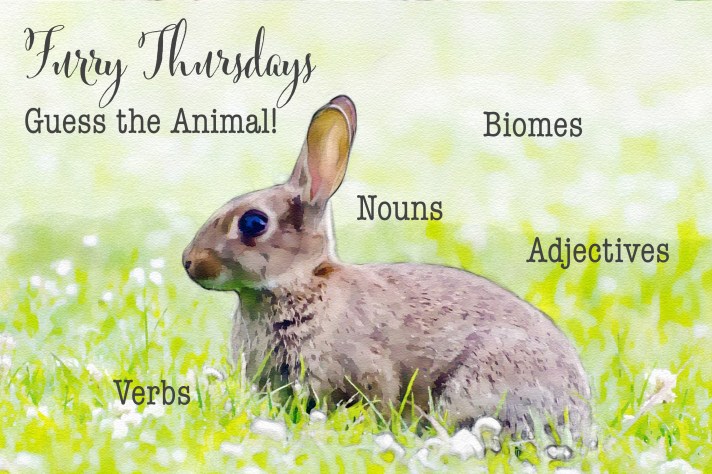
Furry Thursday rabbit